




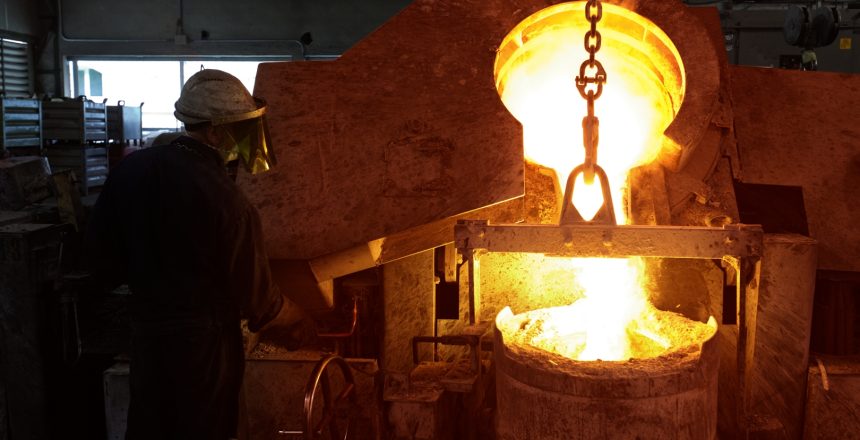
With this modification, the facility will be able to produce up to 8,750 tonnes a year of high-resistance bronze and brass, up from the current 7,000 tonnes — a 25% increase.
According to the ruling issued by the Circular Economy and Innovation Service, the project complies with current regulations on environmental impact, industrial emissions and pollution control, and therefore does not require an environmental impact assessment, as it constitutes a modification of an existing facility rather than an independent project. The authorisation is valid for ten months.
The increase in production entails a proportional adjustment across the rest of the plant’s operating parameters. Bronze scrap consumption will rise from 7,100 to 8,875 tonnes a year, and pure elements from 400 to 500 tonnes. On the energy side, electricity consumption will increase from 10,000 to 12,500 MWh a year, while propane use will rise from 11 to 13.75 tonnes. The plant’s waste management capacity will be adjusted upward accordingly, to 8,875 tonnes a year.
NAVARRA ROOTS, GLOBAL REACH
Wisco Española, based in Betelu with around 90 employees, was the first company set up by Grupo Wisco, founded in 1965 and now one of the world’s leading manufacturers of industrial bronze. The group runs a second production site in Navarra, Erekaldea, located in Orkoien, alongside subsidiaries specialising in machining, industrial boilermaking and laser cutting, an in-house R&D unit, and a commercial presence in India.
The products manufactured in Betelu through continuous and centrifugal casting are turned into ingots, profiles and bars supplied to sectors such as automotive, shipbuilding and heavy machinery. According to figures from the Government of Navarra, the group as a whole generates €150 million in revenue, around €100 million of which comes from exports to more than 50 countries across five continents.
Source: Navarra Capital